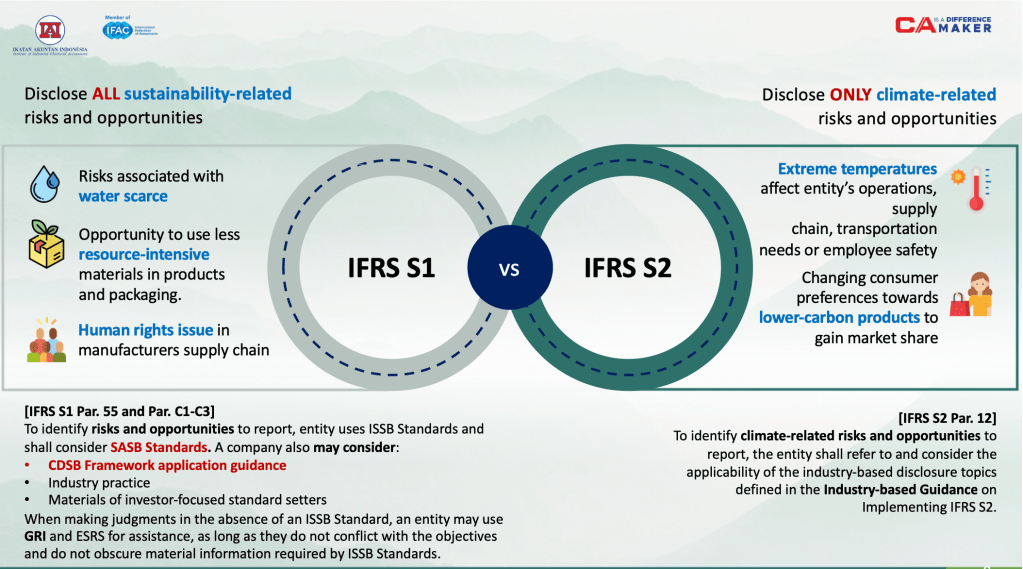
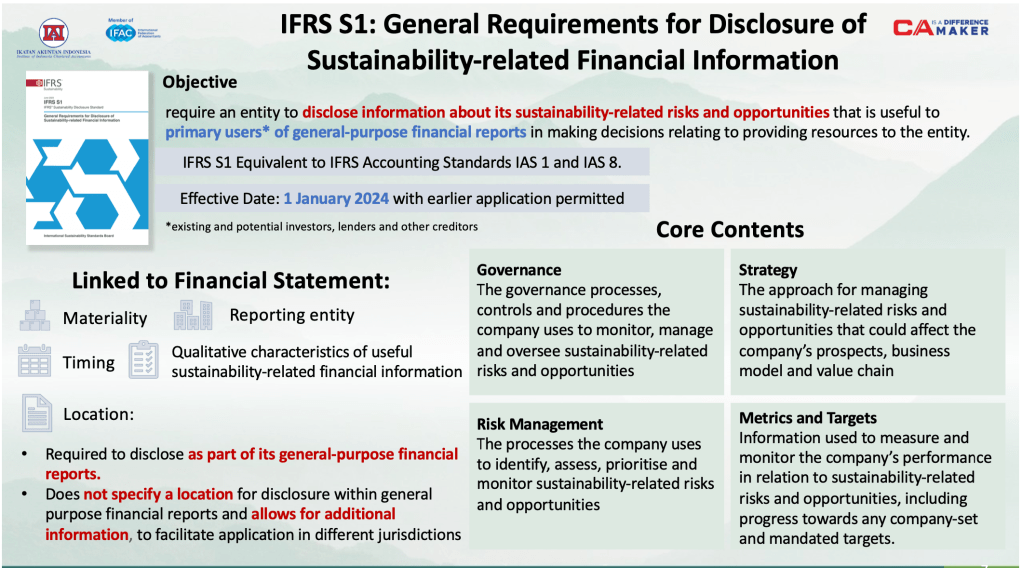
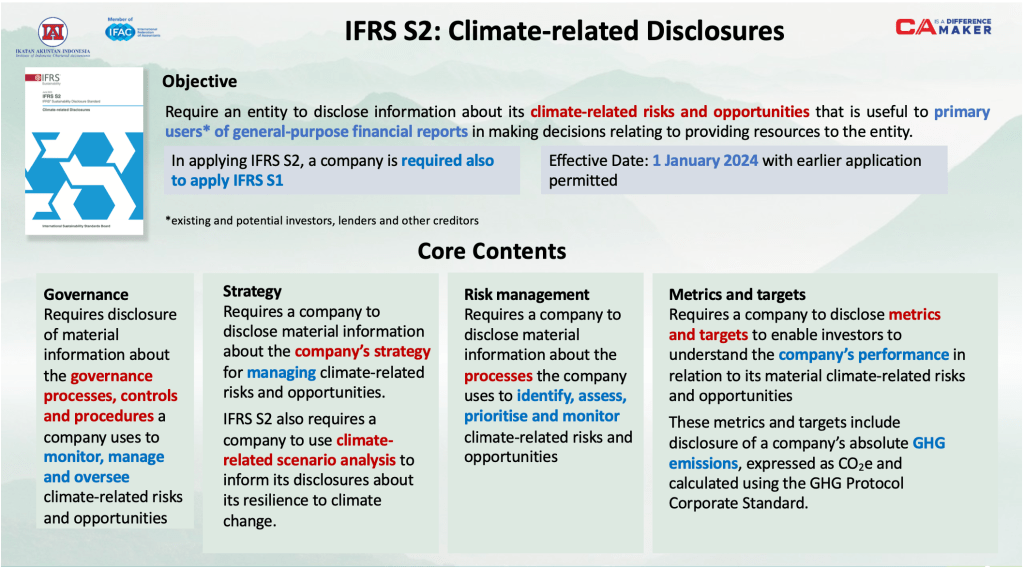
We enter the 25th year of voluntary sustainability reporting since GRI and CDP released their first guidelines. Since then, dozens of sustainability reporting standards have been established by many institutions to cater to the different needs and purposes of sustainability disclosure. In 2023, the ISSB established IFRS Sustainability Disclosure Standards to address the fragmented landscape of voluntary standards. It is expected to be the global baseline for sustainability reporting, the same way ‘IFRS Accounting’ does for financial reporting. Since the release, many countries have adopted the standards for their jurisdiction.
🇬🇧The UK has issued the framework for establishing UK Sustainability Disclosure Standards (SDS) aligned with the IFRS, anticipated to be published by July 2024
🇭🇰The Stock Exchange of Hong Kong has released a proposed IFRS-based climate disclosure in 2023 and is expected to be adopted in 2024
🇦🇺The Australian Accounting Standards Board (AASB) has released a proposed IFRS-based sustainability reporting standard starting in 2024 for reporting in 2025
🇯🇵The Sustainability Standards Board of Japan (SSBJ) has released a proposed IFRS-based sustainability reporting standard intending to publish the finalised version by the end of March 2025
🇸🇬Singapore will adopt a mandatory IFRS-aligned reporting standard starting in 2025 for reporting in 2026
🇧🇷In Brazil, sustainability reporting following the IFRS standards begins in 2024 on a voluntary basis. Mandatory reporting for public companies begins in 2026 (reporting in 2027)
Before the IFRS, mandatory reporting began in 2014 in the EU🇪🇺 for large companies under the Non-Financial Reporting Directive (NFRD). In 2021 in Japan🇯🇵 for prime market-listed companies and in 2023 for all listed companies, with the report based on TCFD frameworks. New Zealand🇳🇿 also made TCFD-aligned disclosure mandatory in 2021. In 2022 in Singapore🇸🇬 and the UK🇬🇧, also based on TCFD. In 2024 in the US🇺🇸 with the standard builds on TCFD and the GHG Protocol. Canada🇨🇦 introduced TCFD-aligned mandatory climate disclosures beginning in 2024.
🇮🇩 Indonesia started its mandatory reporting in 2017 with the inception of POJK 51/2017 – Sustainable Finance. Foreign banks, local banks of all categories, mid to large issuers with assets >Rp50B, and financial service institutions have already been mandated to report. Small issuers with assets <Rp50B and small to mid-sized BPR (rural banks) are mandated to report starting in 2025 for the fiscal year 2024.
The Institute of Indonesia Chartered Accountants (IAI) has established a sustainability standards council named Dewan Standar Keberlanjutan (DSK IAI). One of its missions is to prepare for the adoption of the IFRS Sustainability Disclosure Standard.
Credit: The images in this post were taken from the presentation prepared by Bu Uli titled ‘Introduction to IFRS Sustainability Disclosure Standard,’ which is available on the IAI website
Safe to say, we are heading into a mandatory sustainability reporting era.
 ESG Catalyst